.png)
500 signatures reached
To: MMC, Community Development department, City of Johannesburg. Nobuntu Mpendulo - Director of Library and Information Services
Demand for Children's literacy services in public libraries!
%20Carona%20Moller%20(7).jpg)
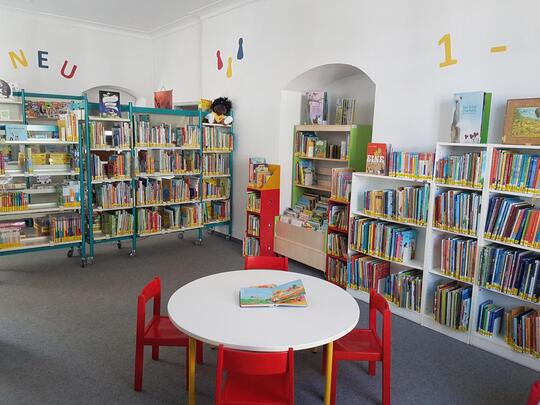
South Africa is facing a severe foundational literacy crisis that requires urgent, coordinated intervention across all spheres of government. Our children cannot read for meaning, and a lack of access to resources contributes greatly to this. We need to ensure that our libraries are properly resourced and functioning well so our children can access them. We need the government to strengthen and improve the City of Johannesburg's public libraries by:
- Promoting and encouraging library-school collaborations by providing examination support, class visits to library facilities, research assistance, etc.
- Supporting early childhood learning activities, such as storytime, spelling bees, and read-aloud sessions at community libraries that children can attend.
- Ensuring that communities have access to library and information services by expanding community access to books and digital information.
- Promoting a culture of reading in communities by hosting reading programmes and literacy campaigns.
- Ensuring that libraries have Children's Programme Coordinators to help coordinate children's activities.
Why is this important?
According to the Progress in International Reading Literacy Study (PIRLS 2021), approximately 81% of Grade 4 learners in South Africa cannot read for meaning in any language (Mullis et al., 2023).
This represents a regression from the 2016 PIRLS cycle, where 78% of learners were unable to read for meaning, indicating that literacy outcomes have worsened over time (Howie,2017).
Further evidence in the Funda Uphumelele National Reading Panel Report (Department of Basic Education, 2025) highlights that:
This represents a regression from the 2016 PIRLS cycle, where 78% of learners were unable to read for meaning, indicating that literacy outcomes have worsened over time (Howie,2017).
Further evidence in the Funda Uphumelele National Reading Panel Report (Department of Basic Education, 2025) highlights that:
- By the end of Grade 3, approximately 15% of learners cannot read a single word
- Learners assessed in English were more likely to reach minimum benchmarks than those assessed in other languages, reflecting persistent inequities in literacy outcomes.
These findings confirm that a significant proportion of children are not acquiring foundational reading skills during the critical early years of schooling. Without intervention, these learners are at increased risk of long-term academic underperformance, school dropouts and reduced economic opportunity.
Public libraries are uniquely positioned as accessible, community-based institutions capable of providing structured after-school literacy support, developmental programming and safe learning environments.
Considering the above, this By-law seeks to formalise the role of municipal libraries in supporting literacy development, educational equity, and lifelong learning through structured programming, qualified staffing, and regulated child-safeguarding mechanisms.
References
1. Department of Basic Education. (2025). Funda Uphumelele National Survey: Summary Report.
2. Howie, S. J., Combrinck, C., Roux, K., Tshele, M., Mokoena, G., & McLeod Palane, N. (2017). PIRLS literacy 2016: South African highlights report (Grade 4). Centre for Evaluation and Assessment (CEA).
3. Mullis, I., von Davier, M., Foy, P., Fishbein, B., Reynolds, K., & Wry, E. (2023). PIRLS 2021 International Results in Reading. https://doi.org/10.6017/lse.tpisc.tr2103.kb5342