.png)
500 signatures reached
To: The National Commissioner of Correctional Services, The Correctional Supervision and Parole Board (Western Cape), The Minister of Justice and Correctional Services
KEEP KEITH BIRD BEHIND BARS – SURVIVORS STILL LIVE IN FEAR
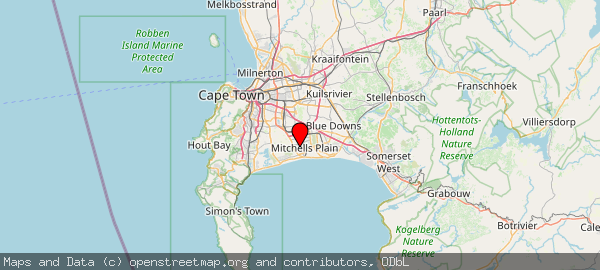
In Tafelsig and across Mitchells Plain, Survivors First is not only fighting a parole application. We are holding space for survivors and families who live with the consequences of Keith Bird’s crimes every single day.
Behind the scenes, we sit with their fear, panic attacks and flashbacks. In public, we insist that their voices are heard in every process that could lead to his release, including medical parole and Victim–Offender Dialogues.
Holding space means creating safe, trauma‑aware spaces where survivors and families can speak honestly, or sit in silence, without being pushed into the media. Every new headline about his parole bid reopens wounds, so we prioritise emotional safety and access to proper counselling, even when we are exhausted and under‑resourced.
We also keep pressure on Parliament, Correctional Services and political leaders to put survivors first. Keith Bird admitted to multiple rapes and two murders and received a 50‑year sentence. Any decision on medical parole must take the safety, fears and rights of survivors seriously.
Behind the scenes, we sit with their fear, panic attacks and flashbacks. In public, we insist that their voices are heard in every process that could lead to his release, including medical parole and Victim–Offender Dialogues.
Holding space means creating safe, trauma‑aware spaces where survivors and families can speak honestly, or sit in silence, without being pushed into the media. Every new headline about his parole bid reopens wounds, so we prioritise emotional safety and access to proper counselling, even when we are exhausted and under‑resourced.
We also keep pressure on Parliament, Correctional Services and political leaders to put survivors first. Keith Bird admitted to multiple rapes and two murders and received a 50‑year sentence. Any decision on medical parole must take the safety, fears and rights of survivors seriously.
Why is this important?
If we allow a man like Bird – a convicted serial rapist and double murderer, with possible undisclosed victims – to be slowly prepared for release behind closed doors, we betray every survivor, here and across the world.
When we act alone, the system can ignore us. When thousands of us speak together, the system is forced to listen. In the Keith Bird case, a surviving victim has already been re‑traumatised by a poorly handled Victim–Offender Dialogue: she was given barely a week’s notice, became physically ill just from seeing his photo, and left the session terrified after watching him smirk at her – with no proper counselling or clear information about whether this is linked to parole. On her own, she can be ignored. When the community and people across South Africa stand behind her, she becomes impossible to ignore.
When we act alone, the system can ignore us. When thousands of us speak together, the system is forced to listen. In the Keith Bird case, a surviving victim has already been re‑traumatised by a poorly handled Victim–Offender Dialogue: she was given barely a week’s notice, became physically ill just from seeing his photo, and left the session terrified after watching him smirk at her – with no proper counselling or clear information about whether this is linked to parole. On her own, she can be ignored. When the community and people across South Africa stand behind her, she becomes impossible to ignore.
Public pressure works. During Bird’s original court case, community mobilisation helped to keep him behind bars and made sure his crimes did not disappear quietly into the system. The same is true now: if the Department of Correctional Services and the Parole Board believe no one is watching, they can process VODs and parole decisions behind closed doors and treat victims as a box to tick. But if they are flooded with signatures, letters, media questions and social media posts, they are forced to take victims’ rights seriously and to account publicly for every step they take in this case.
This campaign is also bigger than one offender. Around the world, the Epstein scandal has shown what happens when sexual predators are protected, and survivors are kept in the dark: abuses multiply, and “justice” becomes a deal between powerful men instead of real accountability. By joining this campaign, you are helping to set a benchmark in South Africa that says: no more secrets, no more silent releases, and time must mean time for serial rapists and murderers. Every signature increases the pressure, every share spreads the message, and every voice makes it harder for authorities to ever quietly open the prison gates for Keith Bird – or anyone like him – while survivors still live in fear.
How it will be delivered
We will print and hand‑deliver the petition to the relevant Correctional Services and Parole Board offices, and also send it by email to the National Commissioner, the Regional Commissioner and the Minister of Justice and Correctional Services.