
10 signatures reached
To: Firoz Cachalia, Minister of Police, and Major General CT Sithole, Acting Divisional Commissioner for Supply Chain Management.
SAPS, YOU ARE THE PROBLEM, WHERE ARE THE RAPE KITS?
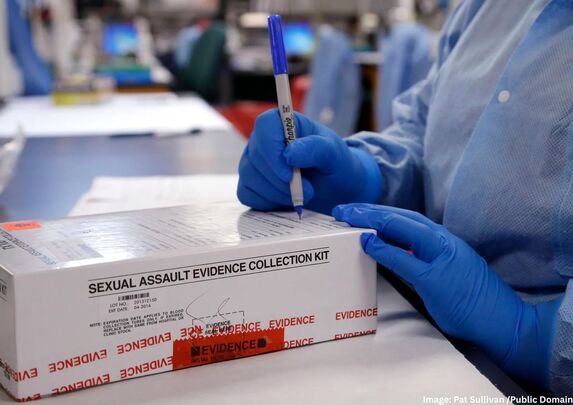
We demand that the South African Police Service (SAPS) national supply chain management immediately overhaul its procurement process to stop purchasing fewer rape kits than required. Specifically, SAPS must:
Procure and distribute sufficient adult D1 and child D7 rape kits to fully meet the actual demand for forensic evidence collection at every police station across South Africa.- Base procurement quantities strictly on reported rape cases, historical usage, and the actual on-the-ground needs of police stations, replacing unpredictable, ad-hoc distribution with a data-driven model.
Publish a clear, immediate compliance plan with strict deadlines to ensure zero shortages and that every single police station maintains an adequate, uninterrupted supply of rape kits.
Why is this important?
South Africa is facing a silent crisis: a severe ongoing shortage of rape kits at police stations across the country. When a woman or child walk into a police station to report a rape they are frequently turned away because SAPS has a shortage of rape kits availabe to collect evidence of the assault. As we have seen in the last year that there were reports of rape kit shortages in the Western Cape, Mpumalanga, Northern Cape and Kwa Zulu Natal. This means that women who are walking into police stations are turned away because there are no rape kits. For example the Daily Maveric reports a case of a doctors at Thuthuzela Care Centres who requested rape kits from SAPS, and was told there were none. When there are no rape kits, then it means that justice can’t be fully administered.
South Africa is ranked amongst the countries in the world with the highest recorded number of rape cases. Rape is scary in South Africa. There is an average number of 108 reported rapes everyday, and more than 4 every hour[1]. SAPS knows that rape occurs approximately every 12 minitues, yet when procuring rape kits[2], this clarity doesnt seem to match that knowledge. Let’s put this into perspective. SAPS procures Rape Kits through a structured public procurement process managed by its national Supply Chain Management (SCM)[3]. In simple terms, rape kits are procured through national tendering and contracts. I know it automatically raises cause for concern when we hear the word “Tender” in South Africa, but bear with me. In a written reply to a parliamentary question on 12 May 2025, the Minister of Police disclosed that SAPS procured 51,138 adult sexual assault collection kits and 30,330 paediatric kits for the 2022/2023 financial year from ECM Technology[4]. The important thing to note here is that the contract period runs for three years: 2023-2026. This means that the 51, 138 adult kits and 30 330 paediatric kits were meant to service all South African police stations for a period of 3 years, but this does not make sense because our country is facing a rape crisis.
As of the 2022/2023 financial year, a total of 43,037 reported rape offenses were committed in South Africa[5]. In the 2023/24 annual crime statistics, there were 42,569 reported cases of rape[6]. Between January and March 2025, 10 688 people were raped, yes, that amounts to116 women and children per day[7]. This means that the combined number of rape kits that were made available over a period of 3 years is 80 000, but the total rape stats over the same 3 year period is 126 081. How can we reconcile these numbers? How is SAPS procuring rape kits when they have the data? Are they guessing instead of making sure that whenever a survior walks into a police station to report their assault, that there is always a rape kit available.
The official crime statistics may point to an apparent decline in reported rape cases, however this is not reflective of what is going on the ground. There is a decline because SAPS is proessing way less rape cases than the ones reported, becuase of the recurring problem of rape kit shortages. Moreover, even if a woman gets a rape kit, she has to wait more than a year for the rape kit to be processed because of the massive DNA backlog in our labs. Consequently when SAPS closes 957 rape case dockets on a monthly basis due to a supposed “lack of evidence”[8], it is all because of systematic failures within SAPS, and not really a lack of evidence. This is why there is such a miscarriage of justice on every end of processing rape cases within SAPS, because of systemic failures. There is a growing lack of trust and apathy towards the administration of justice of rape cases because the system is broken. That is why is understandable why women would not even bother to report rape. If police stations don’t have rape kits, what’s the point?
We are at a point of crisis. The threat of sexual violence is everywhere; it is in our homes, at the taxi rank, in the workplace, on the street, and even at the police station. We are not safe! When rape occurs, we need to know that something will actually happen. Rape kits are critical for collecting forensic evidence; without them, vital evidence is lost forever, and the investigation is crippled from the start.
We want the Minister of Police to treat the procurement and supply of rape kits as an immediate emergency. Women and children need to be able to trust the South African Police Service, but right now, survivors face huge barriers just trying to report these crimes. The last thing they should encounter is a justice system that lacks the basic tools needed to investigate their cases properly. How many more survivors of rape need to be turned away at police stations? How many more women need to be traumatized by being forced to travel from one police station to the next, hoping against hope that a rape kit is actually available? SAPS cannot keep procuring on an unpredictable, ad-hoc basis. As Fannie Masemola revealed in a 2022 parliamentary monitoring group session, there is currently no official minimum requirement for the number of evidence collection kits that must be available at police stations. This means SAPS leadership is content to let shortages happen while survivors suffer.
We must act now. By coming together and signing this petition, you will be saying no to SAPS’S lack of accountability, to the denial of justice for women who are brutally assaulted, to SAPS negligence of women’s pain and apathy towards women’s suffering. Add your signature now to demand a data-driven, accountable procurement system that ensures every single police station has the kits it needs.