.png)
100 signatures reached
To: Chief Magadangele Mashashane of Ga-Mashashane Tribal Authority
Take action and Promote Literacy in Ga-Mashashane
.png)
We request that Ga-Mashashane Tribal Authority, under Chief Magadangele Mashashane invites school principals and vice-principals from the following primary schools – Matshelana, Mashashane, Napo, Morwasethula and Moreleba – to a meeting where they will be made aware of the reading club that exists and how they can use it to ensure that learners at their schools have a space to read outside of the classroom. The reason for the invitation being sent to only the five schools is because the reading club is accessible by foot to most of those school’s feeder villages.
A meeting from the Tribal Authority carries weight and ensures schools cannot dismiss community initiatives. Secondly, the Tribal Authority must actively engage parents, making them aware of the importance of reading and writing for their children’s future. This requires community meetings, awareness campaigns, and direct communication that emphasises literacy as a collective responsibility. Thirdly, we ask that the Ga-Mashashane Tribal Authority selects a representative to be a reading champion at Vahluri Reading Club. This will reinforce the importance of reading to the children, and parents will see the importance of this initiative.
Vahluri Reading club exists to ensure that learners that are denied a regular opportunity to read, explore and expand their horizons due to the material conditions within our schools are afforded that opportunity. Literacy is not simply about decoding words; it is about cultivating imagination, critical thinking, and the ability to participate fully in society. When children are denied access to books, they are denied access to futures. These will also ensure that less children end up using drugs and dropping out of school – which lead to crime. The simple act of mandating participation in Vahluri reading club, mobilising parents to support Vahluri, and becoming reading champions Ga-Mashashane Tribal Authority will be demonstrating leadership and accountability to its current and future residents.
Why is this important?
Education is a fundamental human right and a virtual pillar for personal empowerment, economic growth, and societal development. Yet in South Africa, this right has long been undermined by structural inequality. The Bantu Education Act (Act No. 47 of 1953) deliberately created separate and grossly unequal education systems for Black and white South Africans. Although apartheid has formally ended, its legacy continues to shape rural communities such as Ga‑Mashashane, where Black learners remain excluded from equal and quality education. The promise of democracy has not yet translated into the everyday reality of accessible libraries, functional classrooms, and safe sporting facilities.
The statistics are stark.Only eight percent of public schools in South Africa have functional libraries, and these are almost entirely located in former model C schools – institutions that already benefit from resources to stock and staff such facilities. Approximately 20 000 schools are without libraries, thereby denying their learners access to regular reading opportunities. In 2015, 10.8% of public schools in Limpopo province had access to a library, however, only 2.3% of those are well-resourced and functional. In Ga-Mashashane, none of our schools have fully functional libraries. These statistics are reflected in the province’s reading for meaning statistics, with only 19% of children in Grade 3 reading for meaning, and 15% in Grade 2.
The impacts of this in our community manifests in the increase in high drop-out rates, increased crime and violence over the years. We do not need the statistics in our community to see the direct results of the decrease in reading comprehension, almost all of us know a child or children that have dropped out of school. We see first hand with the increased number of children roaming around the streets and at spaza shops during school hours. According to National statistics, 3% of 15 year olds and 9% of 17 year olds have dropped out of school. In Polokwane, where our district municipality is, the 2021 statistics showed that only 79.0% of those aged between 5-24 are in school.
A child who reads gains confidence, imagination, and the ability to dream beyond their circumstances. Denying rural children access to the opportunity to read is not only unjust – it is a continuation of apartheid’s legacy of exclusion. We must recognise the broader stakes, inequality in education perpetuates cycles of poverty and marginalisation. When rural children are not given an opportunity to engage books outside of the classroom setting, given our overflowing classrooms and that our schools are understaffed and underfunded, they are less likely to succeed academically, less likely to access higher education, and less likely to break free from structural disadvantage. This is not simply about individual futures; it is about the collective future of communities and the nation. South Africa cannot claim to be building a just society while millions of children remain locked out of basic opportunities.
The impacts of this in our community manifests in the increase in high drop-out rates, increased crime and violence over the years. We do not need the statistics in our community to see the direct results of the decrease in reading comprehension, almost all of us know a child or children that have dropped out of school. We see first hand with the increased number of children roaming around the streets and at spaza shops during school hours. According to National statistics, 3% of 15 year olds and 9% of 17 year olds have dropped out of school. In Polokwane, where our district municipality is, the 2021 statistics showed that only 79.0% of those aged between 5-24 are in school.
A child who reads gains confidence, imagination, and the ability to dream beyond their circumstances. Denying rural children access to the opportunity to read is not only unjust – it is a continuation of apartheid’s legacy of exclusion. We must recognise the broader stakes, inequality in education perpetuates cycles of poverty and marginalisation. When rural children are not given an opportunity to engage books outside of the classroom setting, given our overflowing classrooms and that our schools are understaffed and underfunded, they are less likely to succeed academically, less likely to access higher education, and less likely to break free from structural disadvantage. This is not simply about individual futures; it is about the collective future of communities and the nation. South Africa cannot claim to be building a just society while millions of children remain locked out of basic opportunities.
The importance of this campaign lies in its ability to trickle down into ensuring that we prevent some of the challenges that we are already confronted with as a community. When children cannot read for meaning at grade level, they often fall through the cracks, repeating grades and then being demotivated to continue with their studies. The reading struggle is a drug struggle because where do most children who drop-out go? Into drugs. What happens when communities have an increased number of children addicted to drugs? Crime rates increase, and communities become unsafe. These are not separate struggles; they are intertwined.
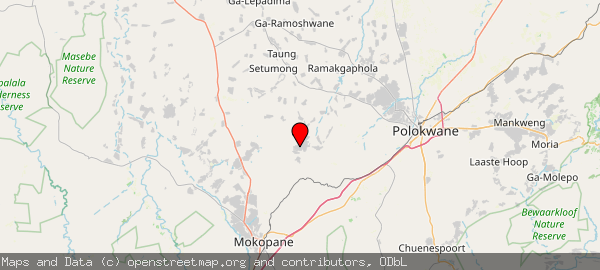
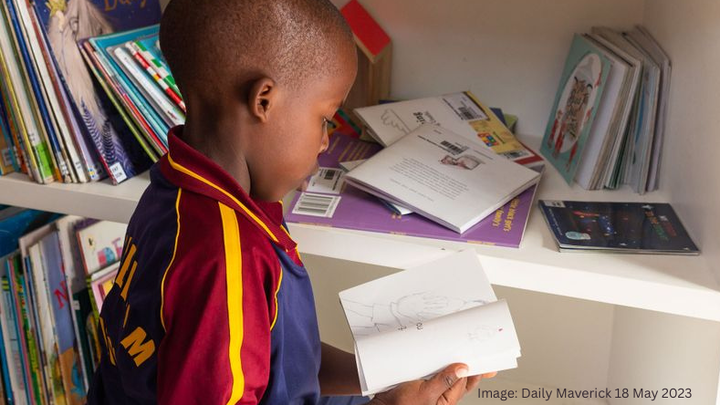
While the government bears the constitutional duty to provide quality education and facilities, communities cannot remain passive in the face of neglect. We have the power to act. We can do our bit to ensure that the children within our community have an opportunity to learn to read and write. Community‑driven initiatives are not a substitute for state responsibility, but they are a refusal to accept silence and stagnation. They are acts of dignity and resistance against inequality. In Ga‑Mashashane, Vahluri Reading Club embodies this spirit of community action. Catering to children from Grade 3 to Grade 8, it provides a space where learners can gather, read, and grow together. It is a grassroots response to the absence of libraries, ensuring that children are not left behind simply because of where they were born.These informal efforts show that talent and potential are everywhere, but without proper support, they remain buried.
This petition is therefore about more than facilities – it is about justice. It is about undoing the inequality of the past, one book at a time. It is about demanding that our children be given the tools to thrive, not just survive. It is about holding decision‑makers accountable while also mobilising community power to fill the gaps. We cannot wait for government promises to materialise; we must act now to ensure that our children have spaces to read and grow.
This petition is therefore about more than facilities – it is about justice. It is about undoing the inequality of the past, one book at a time. It is about demanding that our children be given the tools to thrive, not just survive. It is about holding decision‑makers accountable while also mobilising community power to fill the gaps. We cannot wait for government promises to materialise; we must act now to ensure that our children have spaces to read and grow.