.png)
-
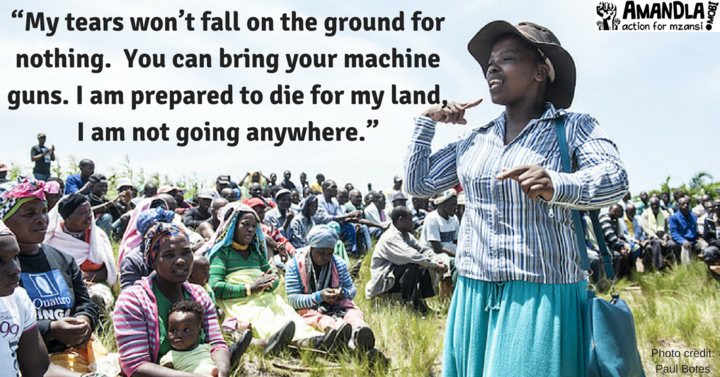 Amadiba under attackFor 10 years, Amadiba communities in the Eastern Cape have been fighting against a company trying to mine titanium in their area. Last week, the community leader was assassinated. This attack can’t be ignored. It’s hard to believe that a campaigner has been murdered for standing up against this international mining giant. Other members of the community who have been standing together to protect their area are fearful for their lives. A woman from the community said: “My tears won’t fall on the ground for nothing. You can bring your machine guns. I am prepared to die for my land, I am not going anywhere.” The MRC mining company are known to abuse human rights. They’ve been trying to mine this land for more than a decade. The community has used people power to block this international company. Now let's use people power to stand with the community.3,071 of 4,000 SignaturesCreated by Right 2 Know
-
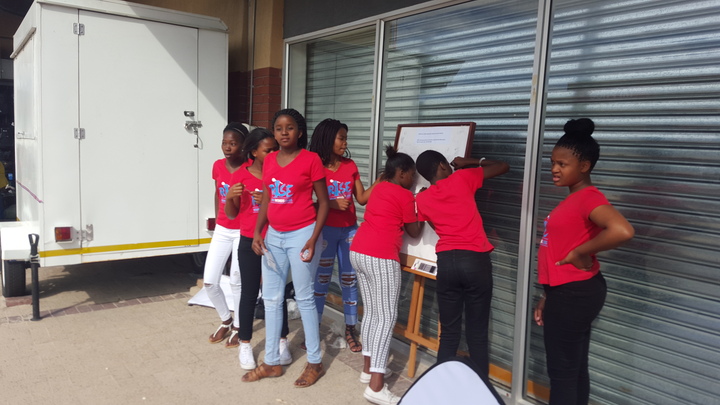 Campaign: #RISE one million signatures against sexual violenceCampaign: #RISE one million signatures against sexual violence “The list ends here” Invitation Letter to sign a million signatures against sexual violence - the RISE’s Advocacy Event in connection with Sinoxolo Mafevuka’s rape & murder case - (24 Feb 2016) This letter serves as an official invitation to support the RISE Young Women’s Clubs Advocacy Campaign in Connection with Sinoxolo Mafevuka’s rape and murder case by signing this petition. The purpose of the event is to take a stance together against sexual violence. At Soul City Institute, we value and appreciate your department’s support in terms of creating safer communities where girls and young women in particular, are not affected by any type of sexual violence and/or its consequences. Hence we are indeed grateful. The event will be hosted by Soul City. The event will consist of the following main activities: #RISE one million signatures against sexual violence. Here the clubs (branded) will meet at the Khayelitsha mall and call out to the community members to sign a petition (on the poster –size papers) for no sexual violence against girls and women. This will take place on Thursday the 24th of March 2016 from 14h00 to 16h30. Your signature is about taking action in ending sexual violence and amplifying the voices of survivors of sexual violence and those at risk of being sexually violated. Be part of this movement and make your voice heard. This event is initiated by Soul City to eradicate sexual violence against women and girls in the Western Cape. We look forward to a continuing partnership with you.7 of 100 SignaturesCreated by Nomfundo Eland
 -
 Booked for HopeThis is a long term campaign that involves donating 15000+ books and setting up a libraries in various schools and development regions of Gauteng! Creating fun book clubs and end up having spelling bees in local schools. A child that reads is a nation that know..39 of 100 SignaturesCreated by Ipeleng Malusi
 -
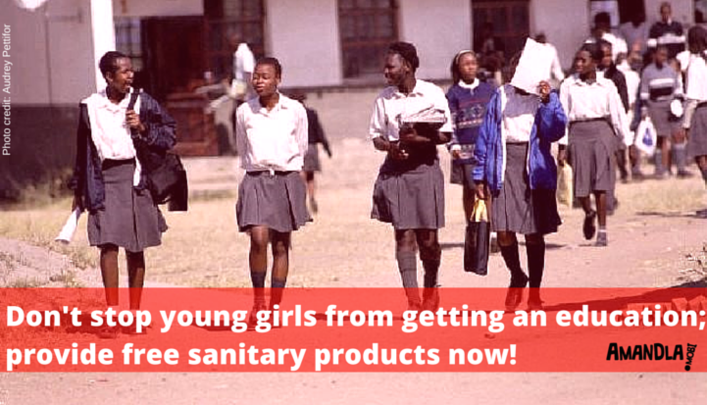.png) Pads, bleeding the poor dry!Akhona is in grade eight. Like many of her classmates, she often misses school when she has her periods because her family cannot afford sanitary pads [1]. Akhona is not alone. On average in Mzansi. a girl will miss 60 days of school because of her period [2]. And some are forced to use socks, newspapers and worse because they can’t afford sanitary pads. Over time this can cause girls to drop-out completely. If they struggle through, they often find themselves unable to fully take part in school activities. Livity Africa's LiveVIPZA campaign, which initiated the parliament challenge, aims to present a plan in June on how to provide sanitary pads to low income communities to the Health Portfolio Committee. But the implementation requires that the Ministers of Basic Education, Health and Social Development kick start the plan. [1] I use a sock as a sanitary pad, says Langa learner http://www.groundup.org.za/article/i-use-sock-sanitary-pad-says-langa-learner_2418/ [2] Dignity Dreams article with information on how many girls miss school a month and in a year: http://www.ngopulse.org/organisation/dignity-dreams3,875 of 4,000 SignaturesCreated by Livity Africa and Pontsho Pilane
Pads, bleeding the poor dry!Akhona is in grade eight. Like many of her classmates, she often misses school when she has her periods because her family cannot afford sanitary pads [1]. Akhona is not alone. On average in Mzansi. a girl will miss 60 days of school because of her period [2]. And some are forced to use socks, newspapers and worse because they can’t afford sanitary pads. Over time this can cause girls to drop-out completely. If they struggle through, they often find themselves unable to fully take part in school activities. Livity Africa's LiveVIPZA campaign, which initiated the parliament challenge, aims to present a plan in June on how to provide sanitary pads to low income communities to the Health Portfolio Committee. But the implementation requires that the Ministers of Basic Education, Health and Social Development kick start the plan. [1] I use a sock as a sanitary pad, says Langa learner http://www.groundup.org.za/article/i-use-sock-sanitary-pad-says-langa-learner_2418/ [2] Dignity Dreams article with information on how many girls miss school a month and in a year: http://www.ngopulse.org/organisation/dignity-dreams3,875 of 4,000 SignaturesCreated by Livity Africa and Pontsho Pilane
-
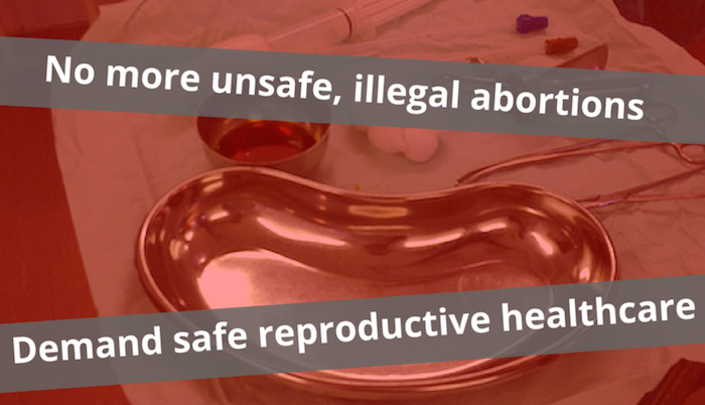 Reproductive justice nowYoung people were encouraged to register for the upcoming elections, but Noziziwe Buthelezi* won’t be voting in these elections or ever. She died last week after after a failed, unsafe abortion. While abortion is legal in South Africa, women like Noziziwe* are forced to risk their lives by using unsafe, illegal options. The posters advertising these fill our streets, yet most public institutions have no information about the safe, free alternatives available to women. If enough of us come together, we can demand that the National Department of Health (NDOH) upholds women’s right to access quality, affordable and acceptable sexual and reproductive healthcare services, including abortion. *Not her real name569 of 600 SignaturesCreated by The Sexual & Reproductive Justice Coalition
-
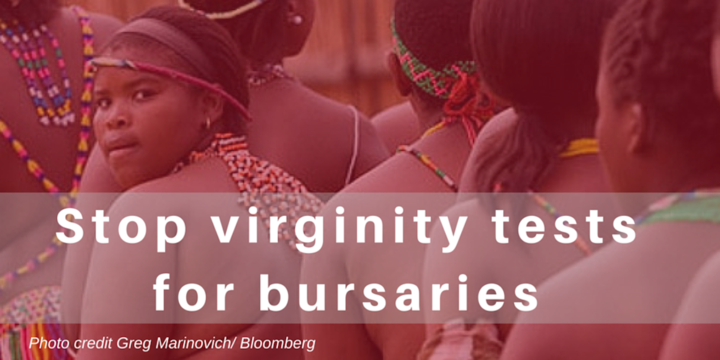 Stop virginity testing for bursariesStudent groups across the country have been calling out for free, quality education for all. Yet right now, women are being forced to give up control of their bodies to access higher education. uThukela District Municipality has introduced a ‘Maidens Bursary Award’, which requires that recipients undergo virginity testing not only to receive it, but also every holiday to ensure they are not sexually active [1]. Virginity testing is an invasive, flawed, traumatising and sexist practice, that has no bearing on whether or not women should be granted bursaries. Add your voice to support women’s rights. We can't let women’s access to education be determined by traumatic, invasive process that strips away women’s control over their bodies. Together, we can ensure that public funds are not used to discriminate against women and uphold systems that keep women oppressed and unequal in the society in which we live. [1] Remain a virgin or lose bursary, students warned. Amanda Khoza for Times Live 22 January 2016.1,303 of 2,000 SignaturesCreated by amandla mobi member
-
Top up all social grants to tackle the cost of living crisisSocial grant money is no longer enough to buy food, electricity, and other things. Ramaphosa needs to top up all social grants soon because this is a crisis. In 2020, Ramaphosa increased all social grants and even introduced a R350 grant in response to the COVID-19 crisis. If we show Ramaphosa that the current cost of living is a crisis in itself, he may see the need to increase all social grants. We managed to get political parties to commit to increasing social grants; we can get them to act on it. Do you mind telling Ramaphosa to top up all social grants?1 of 100 SignaturesCreated by Rina Lekoloane
-
OUR FAMILIES: SAY NO TO ANTI-LGBTQ+ FAMILY VALUESAcross Africa, “family values” is increasingly being used in public and political conversations to define which relationships, families and identities are considered legitimate. When these conversations exclude LGBTQ+ people and other marginalised communities, the consequences are not abstract. They affect whether people feel safe to speak about who they love, who cares for them, how they build families, and whether their lives are treated with dignity. We care about this because African families are already diverse. They include biological families, single-parent families, extended families, families built through friendship, chosen families, and communities that step in when biological families cannot. Queer Africans are part of these families ; as children, parents, siblings, caregivers, partners, friends and community members. Yet public narratives about “family” can make people feel that their families do not count. We believe nobody should have to defend their right to belong to their own community. Our campaign is a counterculture effort using Activism and public action because changing laws and policies also requires changing the stories people hear about one another. When audiences in allover Africa watch films and severe creative mediums about queer families and then speak directly with filmmakers and each other, they are doing more than attending a screening: they are creating a different conversation about what African family can mean. The campaign begins with these shared cultural spaces and grows through public dialogue, media engagement, collective action and solidarity across borders. By signing and sharing this campaign, people can help demonstrate that there is public support for a broader, more inclusive conversation about African families. Building visible pressure gives decision-makers a reason to listen to communities that are often spoken about but rarely invited into the room. We are not against family values. We are asking: whose families, whose values, and who gets to decide? We want decision-makers to listen to the people whose lives are being discussed and recognise that African families already exist in many forms. Our families deserve dignity, safety, love and belonging.2 of 100 SignaturesCreated by Queer Feminist Film Festival SA
-
Show unemployed young people how to access mental health support.Unemployment is an economic crisis, but surviving unemployment is also a mental health challenge. South Africa must respond to both. For two years, I have been unemployed. Like thousands of other young South Africans, I spent countless hours searching for work, rewriting my CV, applying for opportunities, and hoping that the next application would change everything. Most applications were met with silence or rejection. As the months passed, I realised unemployment doesn't only affect your finances. It changes how you see yourself. You begin questioning your worth. You wonder why everyone else seems to be moving forward while your life feels like it is standing still. Eventually, I needed help. I called the South African Depression and Anxiety Group (SADAG), and through its helpline I was referred to a Job Seekers' Support Group. That phone call changed everything. Twice a week, I met online with other unemployed South Africans who understood exactly what I was going through. We shared job opportunities, improved one another's CVs, learnt about changes in the labour market, celebrated interviews, and encouraged one another through rejection. Most importantly, we reminded each other that unemployment is not a personal failure. It is not your identity. It is a chapter in your life, not the person you are. Without SADAG, I would never have found that support. My experience is deeply personal, but it is not unique. Across South Africa, millions of young people are facing the same uncertainty. Statistics South Africa reports that unemployment stands at 60.9% among young people aged 15–24 and 40.6% among those aged 25–34 [1]. At the same time, the World Health Organisation reports that South Africa has the fourth-highest suicide rate in Africa [2]. While unemployment is not the only cause of poor mental health or suicide, experts increasingly recognise that repeated rejection, financial pressure, and uncertainty can have a serious impact on a person's mental wellbeing. Roshni Parbhoo-Seetha, Education Project Manager at SADAG, says many unemployed young people describe feeling "hopeless, overwhelmed and stuck," while registered counsellor Vanishaa Gordhan Narotam explains that many begin to internalise the belief that they are "not good enough" or are "failing at life" [3]. Those words resonated with me because they describe feelings that so many unemployed young people experience but rarely talk about. Behind every unemployment statistic is a young person trying to hold on to hope while searching for an opportunity. When I needed help, I found it through SADAG. Thousands of other South Africans do the same every year. SADAG operates more than 30 national mental health helplines, including South Africa's only 24-hour Suicide Crisis Helpline, and supports more than 160 community-based support groups across the country [4]. These are not just numbers. They represent thousands of conversations, referrals, and moments when someone who feels alone is reminded that help is available. I know that because I am one of the people who found support through SADAG. According to SADAG Operations Director Cassey Chambers, demand for these services continues to grow [4]. This shows how important community-based mental health support has become and why organisations like SADAG play such a significant role in supporting unemployed young people. The Department of Health has recognised this reality. Dr Dudu Shiba has acknowledged that unemployment and other socioeconomic challenges are contributing to South Africa's growing mental health crisis. Through the National Mental Health Policy Framework and Strategic Plan 2023–2030, the Department has committed to strengthening community-based mental health services and has said that it works with organisations such as SADAG [2]. These commitments are encouraging because they show that the government recognises the problem, but recognising the problem is only the first step. As someone who has received help from one of these organisations, I want to understand what these commitments mean in practice. If the Department says it is working with organisations like SADAG, what does that partnership involve? How are unemployed young people accessing these services? How is the Department strengthening community-based mental health support, and how is it measuring whether these partnerships are making a difference? This petition is not asking the Department to start from scratch. It is asking the Department to show unemployed young people how its commitments are being put into practice. Government has recognised the problem. Now it must show the public how its response is helping unemployed young people. When people know where to find support and understand how the government is working with organisations already providing it, they are more likely to reach out before they reach crisis point. I know I know what one phone call meant for me. Every unemployed young person deserves the opportunity to find that same support, hope and reminder that unemployment is not the end of their story. Please sign this petition and help us call for greater transparency, accountability, and stronger community-based mental health support for unemployed young South Africans. References 1. Statistics South Africa. 2025. Quarterly Labour Force Survey (QLFS), Quarter 1: 2025. [Online]. Available at: https://www.statssa.gov.za/?p=19526[Accessed 25 July 2026]. 2. Mkhwanazi, S. 2026. South Africa has fourth-highest suicide rate in Africa, the WHO says.TimesLIVE. 1 June. [Online]. Available at: https://www.timeslive.co.za/news/south-africa/2026-06-01-south-africa-has-fourth-highest-suicide-rate-in-africa-the-who-says/[Accessed 25 July 2026]. 3. IOL Reporter. 2026. Youth Month: The hidden mental health crisis behind South Africa's youth unemployment rate. IOL. 15 June. [Online]. Available at: https://iol.co.za/lifestyle/health/2026-06-15-youth-month-the-hidden-mental-health-crisis-behind-south-africas-youth-unemployment-rate/ [Accessed 25 July 2026]. 4. Koteli, N. 2026. Mental health support group in South Africa spends R150k per month on suicide helpline. The Citizen. 11 June. [Online]. Available at: https://www.citizen.co.za/business/mental-health-support-group-in-south-africa-spends-r150k-per-month-on-suicide-helpline/ [Accessed 25 July 2026].236 of 300 SignaturesCreated by Rotshidzwa Marole
-
Tell Min Tau to stop selling our children to big Alcohol Corps.Alcohol abuse is poisoning our youth. Right now, 48% of young people between 10 and 19 are already drinking alcohol[1]. These are children who should be dreaming big, learning, and building their futures, yet they are being targeted by an industry that profits from harming them. Alcohol is pushed into young people’s lives everywhere: on billboards, in music videos, through celebrities, influencers and sports sponsorships. They are constantly told that drinking will make them confident, attractive, successful and admired. But what many people don’t know is that this kind of advertising is illegal. South Africa’s Liquor Act 59 of 2003, Regulation 7(1)(c), states: adverts may not “suggest that the consumption of liquor… is a source of success, achievement, sexual prowess, social acceptance, personal success, business or sporting achievement.”[2] Due to Minister Parks Taus’ incompetence, alcohol companies break the law every single day. The Johnnie Walker advert with Trevor Noah[3], Savanna’s Neat campaign[4], and Castle Lager’s “brewing greatness” adverts [5] all sell alcohol as a symbol of success, wealth, friendship, and joy and everything the law forbids. We are calling on Minister Parks Tau and the Department of Trade, Industry and Competition to stop looking the other way and start enforcing our laws. Ban adverts that break Regulation 7(1)(c). Protect our communities, not corporate profits. Their failure to act has devastating consequences. Harmful alcohol use costs South Africa R37.9 billion every year in healthcare, policing, social harm and lost productivity[6]. Research shows that almost 50% of homicide cases in South Africa involve alcohol[7]. And 27% of fatal road crashes are linked to alcohol lives ended, families broken, and communities traumatised[8]. Young people pay the highest price. The Department’s own data shows that children who start drinking before 15 are four times more likely to become dependent on alcohol later in life[9]. When advertising tells them that alcohol is a ticket to success, it is shaping how an entire generation sees themselves and their future. Our children deserve to grow up free from predatory marketing that glamorizes something that destroys lives. If we could remove cigarette ads from our stadiums and screens, we can do the same with alcohol advertising that violates the law. By signing this petition, you are standing with parents, teachers, community leaders and young people across the country to demand real accountability. No more adverts that link alcohol with success. Enforce the law now and protect our children’s futures. Sources: [1] https://www.frontiersin.org/journals/public-health/articles/10.3389/fpubh.2022.969053/full [2] https://www.saflii.org/za/legis/consol_act/la2003107/?utm [3] https://www.youtube.com/watch?v=4gYjHFM_4UM [4] https://www.youtube.com/watch?v=2FJAa-Ot-Ds [5] https://www.youtube.com/watch?v=IM7OM7LAHc4 [6]https://wiredspace.wits.ac.za/items/9932e4d4-8e47-4fcf-bbad-a8bf6c0a5914 [7] https://movendi.ngo/science-digest/alcohol-harm-in-south-africa/? [8]https://www.researchgate.net/publication/363981860_Zero-tolerance_drink-driving_and_road_safety_in_South_Africa_What_are_the_options [9]https://www.thedtic.gov.za/wp-content/uploads/Teens-and-alcohol-A-guide-for-parents.pdf?1 of 100 SignaturesCreated by Thabile Mdhluli
-
Reimagining Economic Futures Through Care, Equality and SustainabilityGlobally, actors and activists are using processes including the G20 and Financing for Development Four to call for renewed attention to sustainability, climate resilience, debt architecture, and inclusive growth. Simultaneously, South Africa’s National Dialogue is creating space for a national reckoning to address the lack of public trust in government and the nation due amongst other things to the rise in inequality, exclusion, corruption, lack of accountability for wrongdoing and worrying instances of democratic backsliding. The dialogues connect national and global debates, feminist and ecological economics, and through conversation we hope will construct alternatives for a just, inclusive, and sustainable future. In this space, we would like to see the co-creation of new economic imaginaries that can address South Africa's intersecting crises with the urgency and creativity they demand. Join us as we unpack the historical construction of South Africa’s economy, explore feminist, ecological, and justice-based alternatives for assessing national well-being, unpack the real cost of austerity budgeting on the economy and human rights, and explore progressive tax reforms to fund a care-centred, just transition. The dialogue series will take place between August and October 2025.1 of 100 SignaturesCreated by New Economy Hub
-
Collective Community Petition on PalestineAs communities from the south of Johannesburg that were historically developed under the dehumanizing Group Areas Act, we have a collective memory of living under the pain, trauma and tragedy of apartheid. As formerly oppressed people we carry in memory our united struggles against apartheid, and we therefore pledge solidarity with the oppressed and colonised people of Palestine. We condemn apartheid Israel and will continue to support Palestine through our resources, our advocacy, our activism and mobilization. We will live to see a free Palestine. We endorse this collective petition grounded upon our values of faith, justice, freedom, peace, human dignity and human rights. We call for the arrest of Netanyahu and declare that he is the leader of war crimes and genocide against the Palestinian people. Under his leadership Israel is guilty of a crime against humanity. We call for an immediate and permanent ceasefire and the release of all hostages and political prisoners. We further call for food and medical aid to be distributed to the Palestinian people by credible and internationally recognised humanitarian relief organisations and not a ‘fly-by-night’ foundation, which acts in concert with apartheid Israel’s army that kills starving and desperate civilians seeking food. We call on world leaders and nation states to ensure that a free Palestinian state is given its rightful place as a fully independent state in the world community of nations. We call for peace and peaceful co-existence of Muslims, Christians and Jews in Palestine and in the Middle East. As concerned, committed and free South Africans, we choose to speak out against apartheid Israel. We join in our faith, beliefs, prayers and activism to see the end of apartheid Israel, and we call on local leaders and communities to join us in showing solidarity with Palestine.1 of 100 SignaturesCreated by Irfaan Mangera
Cookies help us improve and optimise this site. Read more