.png)
-
 We demand trained staff members at UNISA - Durban main campusThis is important because; • Durban is very diverse, students who come from deep rural areas need to be catered for in a manner that levels up with their current knowledge. • Students must be given valid and significant information that does not mislead them on their academic choices. • .To avoid students from travelling all the way to Gauteng, in order to get their queries attended to, and fixed. • To ward-off the confusion students have and put them at ease with their studies which will also improve their academic performances. • To avoid students from wasting time and money by taking modules which are not required for their qualifications. •Qualified and well-trained staff members can make UNISA one of the best universities in Africa.139 of 200 SignaturesCreated by Nonhlanhla Cynthia Mhlongo
 -
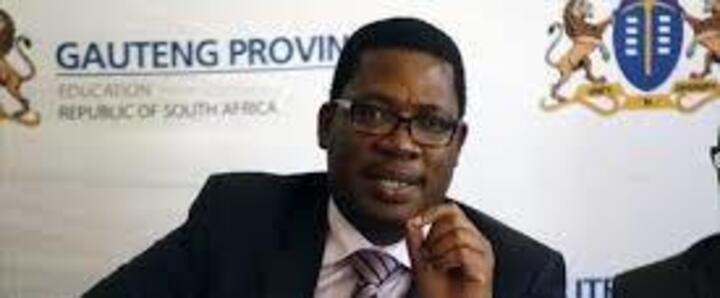 Tell Panyaza Lesufi to remove any hair policies in Gauteng schools that are discriminatorySchools are institutions of learning and not only learning about modules placed in curriculum's but also raising and emphasizing the importance of self-discovery and identity. Students need to learn more about themselves as well as their cultures and then teach others about it. When we teach young black girls that their hair has to be changed so they can suit a certain school culture what are we teaching them about themselves and how they were born? Schools should embrace the black culture and not try to change it. Most of these schools implemented their hair policies way before African black children were allowed into the then-White-only schools so they are not very inclusive of the black culture and the way African hair grows.Were the hair policies of schools reviewed after Apartheid and changed to suit everyone's hair needs? Each school can have different policies and school cultures as long as black pupils do not feel like they are being prejudiced against how they look as Africans. Schools need to also enforce educating themselves on African black cultures and how the African hair grows if they continue to enforce hair policies. [1] Pretoria Girls High pupils were victims of racism-MEC, Lizeka Tandwa for News24, 2016/12/03 [2] Gauteng High School embroiled in natural hair scandal, Silindelo Masikane for the eNCA, Monday 11, March, 2019 [3] Several State & Private Schools have bans on Dreadlocks. Afros and braids, Prega Govender for Mail & Gaurdian, 02, September, 2016 [4]School Governing Bodies: Play your part, Department of basic education 2019 [5] Lesufi gives Kempton Park school deadline to change hair policy, Nation Nyoka for News24, 25/07/2017415 of 500 SignaturesCreated by Matheko Ramolefo
 -
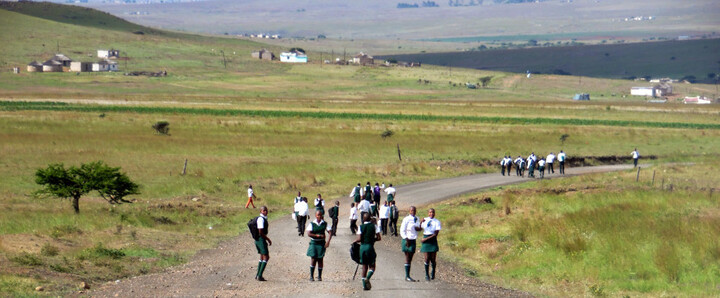 Implement proper measures to monitor and run efficient scholar transport in KwaZulu-Natal1. Many children in rural KZN even in our current times still walk for more than 5km to school. KZN has the highest proportion of children walking to school. Scholars are incorrectly classified at the department of education as attending the school of choice and not that that is closest to home. Learners have difficulty concentrating and staying awake in class due to waking up early and walking long distances on an empty stomach. Children walk on gravel and curvy mountainous area making it dangerous for the children walking especially girl children. Children rely on minibus taxis and bakkies for transport. In 2017 alone 10 pupils died and more than 90 were injured using these modes of transport. It is important that children are given access to safe transportation from home to school to allow them their right to education and safety. 1. The Long walk to school. Nkululeko Nene for IOL. 17 September 2017132 of 200 SignaturesCreated by Zanele Cindi
 -
 Request for transgender programs with free access to hormones at TEN81 Centre Clinic.Hormone replacement therapy (HRT) acts as a very vital part for transgender people to feel more like themselves. Due to the fact that transgender men and woman will never be able to produce these hormones naturally, HRT is a lifelong treatment that needs to be used recurrently, similarly to chronic medication. People take either the hormone Oestrogen or testosterone with other drugs to help them attain the physical characteristics that society ascribes to the gender they identify with. Examples of this treatment include the development of breasts for transgender woman by taking the hormone Oestrogen whilst Testosterone aids masculinity advances for transgender men [3]. Transgender people are defined as those whose personal identity and gender does not correspond with their birth sex [4]. Navigation gender-affirming proves to be scarce and difficult in our country [2]. Section 9 of the Constitution prohibits discrimination, among others on the grounds of gender [1]. The Alteration of Sex Description and Sex Status Acts (2003) corresponds with our constitutions laws which permits one to change the sex description on their birth record under certain circumstances [4]. OUT provides direct health services to the lesbian, gay, bisexual and transgender (LGBT) community, MSN, sex workers, and injecting drug users, including HIV testing, counselling, treatment and general lifestyle advice and support. OUT is dedicated to the building of healthy empowered LGBT communities in South Africa with intentions of reducing heterosexism and homophobia in society [5]. The mission of the organisation is working towards lesbian, gay, bisexual, transgender peoples’ physical and mental health related rights [5]. The TEN81 Centre Clinic ran by OUT offers services that are professional, free, safe, confidential, non-judgmental and inclusive. Trans South African you-tube Vlogger Glow Mamiii shares her personal journey on the struggles of gaining access to HRT. She began seeking treatment at Chris Hani Baragwanath (Soweto) but was told she would have to wait 3 months in order for them to administer the HRT. She then opted to seek treatment from a private doctor which not many people can afford as medical aids don’t cover gender-affirming treatments such as HRT and surgeries. She reveals her struggle of finding a trans-friendly private practitioner as well as her personal details regarding the bodily changes and psychological and emotional distresses she experienced on HRT [7]. During the course of her psychiatric consultations and psychotherapy meetings she speaks out against being diagnosed with gender dysphoria as transgenderism is classified as a gender dysphoria disorder [8]. Medical aid schemes don’t cover gender-affirming treatments such as HRT and surgeries as they are considered “lifestyle choices” which leaves trans people with the burden of covering these costs [1]. HRT can cost up to R800 a month adding up to almost a quarter of a million rand on medication [3]. 15% of transgender people are living in poverty compared to 4% of the general population. 19% of transgender people report lacking any form of health insurance including medical aid [6]. Studies show that access to gender-affirming treatment helps reduce thoughts of self-harm and suicide among transgender people. The only public hospitals that offer trans-specific healthcare services in South Africa are [4]: • Chris Hani Baragwanath (Soweto) • Steve Biko (Pretoria) • Groote Schuur (Cape Town) • Helen Joseph (Johannesburg) Treatments are often limited and dependent on how close you live to the facility and the lengths of their waiting lists. The treatment entails regular check-ups and to ensure correct dosage. Withdrawals from HRT lead to severe psychological and emotional distress like gender dysphoria, depression, anxiety and fatigue. [1] https://www.2oceansvibe.com/2018/10/26/healthcare-medical-aid-and-the-transgender-struggle-in-south-africa/ [2] https://bhekisisa.org/article/2018-10-26-00-tips-for-finding-a-trans-friendly-healthcare-provider [3] https://bhekisisa.org/article/2018-10-26-00-the-high-cost-of-being-yourself-transgender-healthcare-and-private-medical-aids [4] https://www.sowetanlive.co.za/s-mag/2019-04-05-conversations-transgender-healthcare-in-crisis/ [5] https://www.out.org.za/index.php/about-out/vision-and-mission [6] https://www.google.co.za/search?q=transgender+healthcare&client=safari&hl=en-za&prmd=inv&source=lnms&tbm=isch&sa=X&ved=2ahUKEwjfjq-ax6TiAhW2TBUIHTiOCGAQ_AUoAXoECA8QAQ&biw=375&bih=553#imgrc=kzBjfD4lQ0qMIM [7] https://youtu.be/WXYiZK0l6mc [8] https://youtu.be/CpCwS177WhU2,036 of 3,000 SignaturesCreated by Mamello Mofokeng
 -
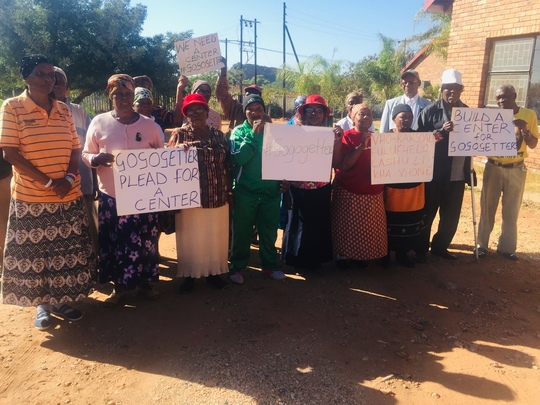 Tell MEC Nkakareng Rakgoale to build a center for the Gogogetters in MusinaBuilding a center for the Gogogetters is part of the Department of Social Development’s mandate to deepen social assistance and enhancing the capabilities of communities to achieve sustainable livelihoods and household food security[2]. It is important because old people are seen as a liability, while in actual fact they can have a big impact on social and economic prosperity locally and globally. Gogogetters are lacking recognition because of the pervasive negative perception of ageing hence, they are finding it hard to build a center for themselves. The Musina Local Municipality has since given the Gogogetters land to build a center but because of financial difficulties, they are unable to utilize the land. Gogogetters are ready to venture into entrepreneurship because it is an important role in the country’s development. The center will boost the economy of Musina and attract more tourists as it is one of South Africa’s special economic zones. Looking at the 2019 Statistics South Africa’s Quarterly announcement of unemployment rate in the country, it has increased to 27,6% hence such an initiative is for a good cause as it will help deal with unemployment challenges [3]. The budget from Social Development is not enough and this campaign is calling upon the newly elected MEC for Social Development in Limpopo,Nkakareng Rakgoale to make sure the budget allocated for Gogogetters is increased to enable the building of the center that the Gogogetters have been longing for the past 3 years. Let’s come together and signing to join this campaign to ensure MEC Nkakareng Rakgoale builds a center to better the lives of Gogogetters. Namadzavho Mukona is a 69 year old Gogogetter whose life has been positively changed by this organization. She says because of Gogogetters, “I no longer get sick by always sleeping at home doing nothing. The activities we do at the Gogogetters are keeping me active and healthy”. References [1] South African Year Book, Social Development 2016/2017 [2] Investigative Hearing into Systematic Complaints Relating to the Treatment of Older Persons, South African Human Rights 09 June 2015 [3] SA’s Unemployment rate spikes, Sarah Smith of Mail &Guardian 14 May 2019128 of 200 SignaturesCreated by Sanra Mbedzi
 -
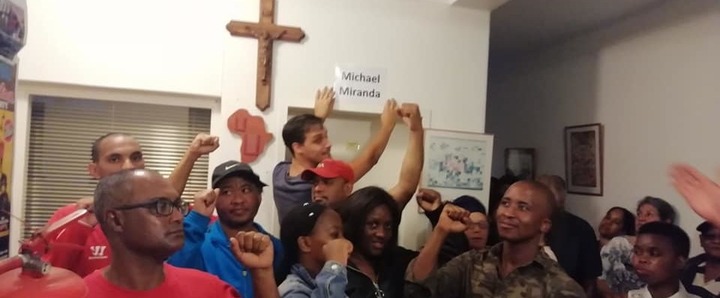 Save the Athlone Cultural Hub and the CWD building at 146 Lawrence rd, AthloneIn the days of apartheid, when many turned their backs on activists, the Catholic Church provided refuge, provided a source of comfort to the families of Coline Williams and Robert Waterwich. The youth from UDF's Wesco (Western Cape Student Congress) met regularly at the CWD premises, as did YCW (Young Christian Workers) and several other youth and community organizations. Activists on the run from the apartheid state were given refuge. It is now a space for the working class to engage in cultural activities such as music, art, yoga, the study of history and the history of Table Mountain. The CWD Executive wants to close the building. It is already a community that has few spaces for Culture. It should remain a living cultural space and heritage site. Please sign and share this petition. In addition, for over 50 years the CWD projects operated from this centre and elsewhere. Tens of thousands of people were assisted. There were social workers; there was training for Early Childhood Development. There was a sewing project that brought together refugees with local workers. It housed the science laboratory of the legendary St Columba's school. The residence for the teachers was housed upstairs on site. Over the past three years the then Arts and Culture manager, Andre Marais has managed to build up the Athlone Cultural Hub. Under his stewardship the Western Province Mountain Club is now housed in the building. They take youth of the area up Table Mountain and give talks about the history of the mountain. The Academy of Music has their administrative office on the premises. A jazz band, with local artist Trudy Rushin, have their practice sessions on site. The Revolutionary Yoga group operates at the Hub. There is also a dance club. There is a library of 30 000 classics and 10 000 movies. There have been several cultural activities held. There have been several education schools run by UCT Summer School. There is a corner for volunteers to read children stories. A memory garden has been started for Coline Williams and Robert Waterwich, who were killed in the struggle against apartheid. Robert was a former student of St Columba's and he would have used the laboratory. On the 13th February 2019 three rooms were renamed after the Trojan Horse 3. The library has been named after Shaun Magmoed. The section where the social workers used to operate, in front, has been named after Michael Miranda, while the upstairs section which used to be the dormitory of the teachers and lately was the section that housed the ECD, was named after Jonathan Claasen. Retired teachers are prepared to run free maths and science classes on site. A local resident is prepared to offer free carpentry classes. There is a strong case for the building to be declared a living heritage site, especially now that a funder has stepped forward that has offered to cover running costs, including that of Cultural Hub manager. Help us keep the building open.456 of 500 SignaturesCreated by Save the Athlone Cultural Hub
 -
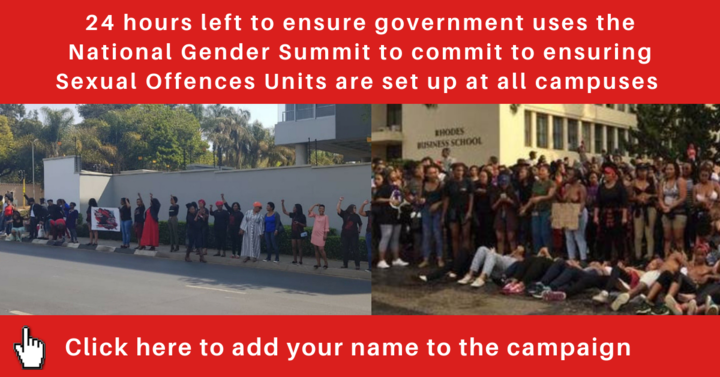 Government must ensure there are Sexual Offences Units at all institutions of higher learningA Sexual Offences Unit will ensure that survivors of gender based violence receive specialised and sensitive support and resources that will help towards their healing journey. Campuses that have an already existing ‘gender office’ need to change their systems so that they serve the concerns of everyone on campus, and are in line with the proposed Sexual Offences Unit. The Black Womxn Caucus, an intersectional women’s organisation at Wits University have called for a ‘rapid response rape team’ for gender based violence to be established on the campus. The movement advocates for a thorough understanding of gender violence as it occurs in many forms and in many spaces, and reinforces the violences that womxn and gender non-comfornimg bodies are subjected to in this country. As the number of rape, sexual abuse and killing of womxn and children in this country continues to increase so does the call from those most affected by violence in our society to organise ourselves to fight gender based violence. The Black Womxn Caucus insists that if their Vice Chancellor at the time, Adam Habib, among others, were able to establish a rapid response team [4] to clamp down on student protest action following the #FeesMustFall movement, there is no reason the university should also prioritise the establishment of a ‘rapid response team’ to address gender violence on campus. The Sexual Offences Units should include: support staff who encourage everyone on campus to go for prosecution through reporting their cases; this includes a 24 hour psychologists available at all times for emergencies, and a space for activists to assist in sharing insights to developing better models aimed at reducing all forms of violence on campus. This unit must also represent the different socio-economic backgrounds of members of the institutions community, and be able to cater to survivors of all backgrounds.152 of 200 SignaturesCreated by Black Womxn Caucus
 -
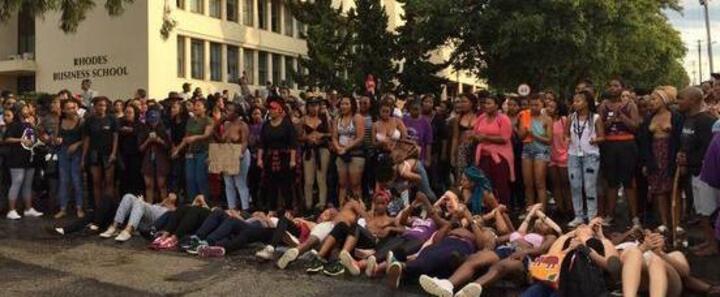 We demand a Sexual Offences Unit at Rhodes University!Two years ago, with what sparked an international conversation on the issue of rape and rape culture, commonly known as the #RUReferenceList protests, women and non-binary individuals set precedent for other institutions across the country to participate in a national discussion on problematizing how unsafe campuses are. In 2016 women, from all walks of life across the country demonstrated in solidarity with those at Rhodes University – highlighting not only the prevalence of GBV in our society, but also the failure of institutions in protecting its students. Since the advent of democracy, our institutions pride themselves in being leaders of transformation in society. They have prided themselves in being vehicles providing a vast range of knowledge to individuals entering their spaces. Yet, when it comes to issues of gendered discrimination and the effects it has on individuals – particularly women and minority groups – our cries seem to be invalid, and our experiences erased. We are tired of saying “enough is enough!” when it only suits the institution’s agenda. Your ‘enough’ does not suffice as every day we continue to live in fear of when our bodies will become another statistic to the vast crimes we experience on a daily basis. A Sexual Offences Unit will ensure that survivors of gendered and sexual orientation violence are met with the utmost sensitivity, specialized support and resources that will help towards their healing processes. The Sexual Offences Unit should include: support staff who encourage students to go for prosecution through reporting their cases; this consists of 24 hour psychologists available at all times of emergencies, and a space for student activists to assist in sharing insights to developing better models aimed at reducing all forms of violence on campus. This unit needs to be cognizant of all socio-economic demographics of the student body, and thus be able to cater to survivors of all backgrounds. The unit will provide sensitized support to student survivors who might not want to go through reporting their cases at the SAPS where they face further victimization due to a lack of training, resources and subsequently compassion. Rhodes University needs to cultivate a space that will ensure a prioritization of justice to survivors of sexual violence. In conjunction to this, the unit will have to implement the recommendations that were presented by the Sexual Violence Task Team at the end of 2016 in response to the demands of the student led protest #RUReferenceList. This unit will be very important as students leave college and university environments to enter the working space where issues of harassment are also prone. Socialization plays a huge part in curbing violence in our country, and it should start at home, in this case, at school. Rhodes University, much like society at large, needs to tackle gendered discrimination systemically through acknowledging and institutionalizing a culture of accountability in relation to the violence students experience. We need to push for our spaces of higher learning, the communities that we occupy every day, to internalize on a personal level policies and practices that speak to dismantling this culture of protecting perpetrators and stigmatizing survivors.841 of 1,000 SignaturesCreated by Yolanda Dyantyi
 -
 Title deeds for the deserving residents of Pennyville flatsThe majority of people living in Pennyville are currently either unemployed or the families are child run or elderly run with most receiving grants. Most of them cannot afford the rentals and therefore in arrears amounting to thousands of rands. Attempts to address this matter with the relevant authorities have been unsuccessful.60 of 100 SignaturesCreated by Thabiso Seipobi
 -
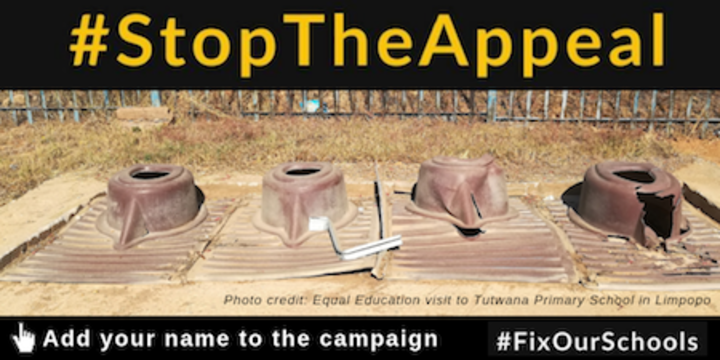 Tell government to #StopTheAppeal and #FixOurSchoolsThe Norms and Standards law compels the government to fix sanitation in schools. Last month, in the Bhisho High Court, Acting Judge Nomawabo Msizi fixed the unconstitutional loopholes in this law, which allowed Basic Education Minister Motshekga to indefinitely delay fulfilling this obligation. The judgment meant that government would be fully bound to meet the deadlines set in the law. Instead of immediately beginning to improve school infrastructure, Cyril Ramaphosa’s government is now wasting desperately needed State resources and time to appeal the judgment. They are joined in this farce by the nine Education MECs. In the wake of Judge Msizi’s positive judgment, on 31 July EE leaders wrote to President Ramaphosa about the need to move forward in efforts to decisively address the ongoing backlog of dangerous and inadequate infrastructure in South Africa’s schools. Critically, we explained to him that we tried to avoid recourse to the courts, and had reached out to Minister Motshekga as early as February 2014 to raise issues about the unconstitutional wording of the Norms and Standards. In addition to our letter to the President, we wrote directly to the DBE. Both letters were not responded to. But yet again, government chooses to dodge its constitutional, legal and moral duties to #FixOurSchools. The decision to appeal the school infrastructure judgment jeopardises the fight for quality teaching and learning, and the immediate safety of learners. It is an incomprehensible and unconscionable collective dereliction of duty. Government is unwilling to release school infrastructure improvement plans timeously, forcing us to lodge a Promotion of Access to Information (PAIA) application. The State missed its date to file with the Polokwane High Court, a plan to eliminate pit latrines in Limpopo, as required in the Komape case judgment, - instead it filed a last minute application to extend the deadline set by the High Court. The time for debating the lives of South Africa's children in court must end!1,321 of 2,000 SignaturesCreated by Equal Education
 -
 Stop taxing my periodThousands of amandla. mobi members have fought hard to make free sanitary products a reality for millions of girls. Unfortunately, for the households that could put a few rands together to buy a pack, the VAT hike announced earlier this year has made it even more expensive, meaning more people who need sanitary towels could go without. But right now, we have an opportunity to change that. Public submissions to the expert panel investigating the expansion of zero rating to more items was extended. But it ends on June 4, 2018. Send the panel a direct message telling them to recommend that sanitary products are included in the list of essential zero-rated products. People who get periods will buy up to 17 000 sanitary pads or tampons in their lifetime [1]. This basically means that the average person could spend up to almost R40 000 on sanitary pads in that time [2]. This in a country in which over 50% of the population live in poverty. The VAT hike has had an impact on the cost of living in Mzansi. People are spending much more on essential food items, reducing how much they have for other needs. And living a decent, dignified life requires so much more than food. Our community exists to primarily protect us, Black women. You, and over two hundred thousand others have taken action to make this real. And we need you to once again stand with us and make sure the panel recommends dropping the tax on our periods. [1] A guide to 'alternative menstruation': Save money and the world during your period, Pontsho Pilane for Bhekisisa. 31 Oct 2016. [2] Why treasury won't support a fall in the tampon tax, Pontsho Pilane for Bhekisisa. 5 Dec 2016.680 of 800 SignaturesCreated by Amandla.mobi Member
 -
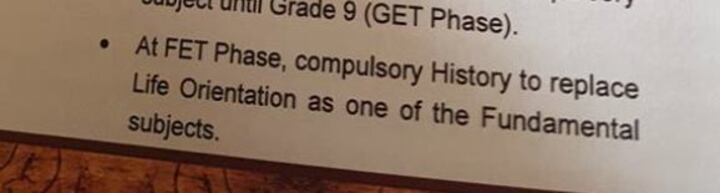 Life Orientation must not be scrapped in Grades 10-12Learners need LO in Gr 10-12 and many benefit a great deal from this vital subject. The Minister made the promise in 2015 that LO will not be scrapped, but strengthened. So don''t break this promise! The implications of taking out LO will mean that teachers will not specialise in LO at universities if it is a small subject that only goes to grade 9. It will mean the end of the subject. There are many great LO teachers who are devastated. Learners only take career ed seriously in Grades 11-12. LO teachers are heartbroken at the sad news of history usurping LO. This was not a democratic decision not were LO experts consulted. To pit one subject against the other is unwise. Instead, the Department can create a subject called which can include African history and herstory, African role models and Governance, Constitution, Voting, Human Rights, etc. LO topics are vital to learners in Grades 10-12, they give in-depth career education, sexuality education, create awareness on gender issues, improve study and exam writing skills, stress management, substance abuse, environmental protection and relationships, diversity and self-esteem enhancement. They also promote Indigenous Games. [1] Motshekga defends life orientation, The New Age. 15 Feb 2017.2,353 of 3,000 SignaturesCreated by Edna Rooth
Cookies help us improve and optimise this site. Read more