
-
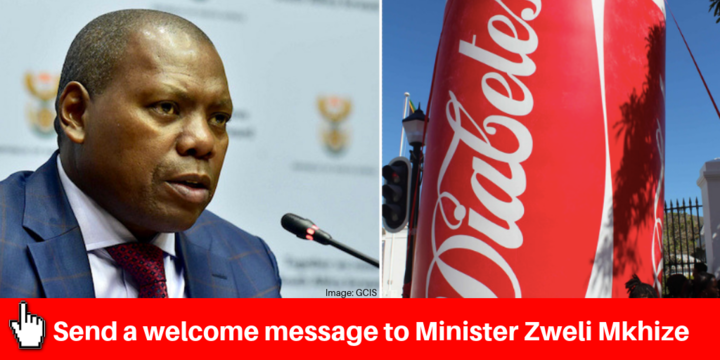 Tell our new Health Minister we want a stronger sugary drinks taxIn 2017 thousands of us came together to stop the likes of Coca-Cola trying to stop the sugary drinks tax. While the beverage industry watered down the sugary drinks tax, we won our campaign to get the tax implemented. With a new Health Minister, Dr Zweli Mkhize, we have an opportunity to get his attention and call on him to take strong action against Non-Communicable Diseases through supporting our call to increase the sugary drinks tax to 20%. Let’s get Minister Mkhize’s attention. If enough of us come together and send him welcome messages, it could get the new Minister to make protecting the sugary drinks tax from industry a priority and increase it to 20%. It only takes a minute to send the pre-written message to Minister Mkhize, but if you could add a personal message, our welcome will be even more powerful. Excessive sugar intake causes increased risk of diabetes, liver and kidney damage, heart disease, and some cancers. Tackling Non-Communicable Diseases needs to be a national priority, and increasing the tax on sugary drinks is a first step in addressing this national epidemic. The new Minister of Health, Dr Zweli Mkhize, has a history of doing important life-saving work on HIV in KZN. He could be an important ally if he pledges his support to increase he sugary drinks tax and could help protect it from industry. Send a direct welcome message to Minister Mkhize and make sure he joins us in our fight to make the food we eat healthy. If we flood his mailbox with welcome messages, he’ll have no choice but to prioritise protecting the sugary drinks tax from industry and increase it to 20%. When Coca-Cola tried to stop the Sugary Drinks Tax from happening with dodgy research on job losses and pressuring our elected leaders - we came together and stood against their bullying. From fighting greedy corporations to lobbying MPs to protect the tax- we’ve shown that our people power works. Let’s come together again and make sure the Sugary Drinks Tax is here to stay. [1] Junk food, junk status cause skyrocketing medical costs, Health-e News for The Daily Maverick April 24 201766 of 100 SignaturesCreated by amandla .mobi Member

-
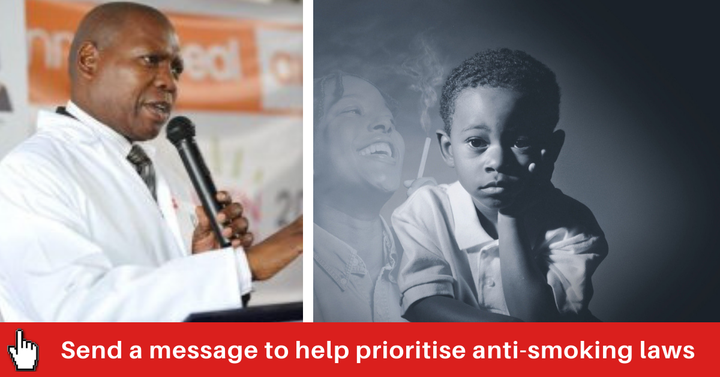 Tell the new Minister of Health to make anti-smoking laws a priorityLast year thousands of amandla .mobi members came together and sent the Department of Health submissions in support of the Draft Tobacco Control Bill to ban public smoking, regulate e-cigarettes and other tobacco control regulations. The Department of Health is finished reading our submissions and the process has slowed down once again. But, with the appointment of a new Minister of Health, we have an opportunity now to put pressure on the department. We can make sure one of the first decisions the new Health Minister makes is prioritising the bill. Let’s get Minister Mkhize’s attention. If enough of us come together and send him welcome messages, it could get the new Minister to help make these overdue anti-smoking laws a reality. Sign the petition to send Minister Mkhize a message. It only takes a minute to send the pre-written message but if you could add a personal message, our welcome will be even more powerful. Each year South Africa spends more than R59 billion to address tobacco related illnesses like lung cancer, emphysema, asthma and bronchitis [1]. At the same time the country only collects between R11 billion and R13 billion from tobacco taxes [2]. This means the South African taxpayer is paying for the healthcare bill of tobacco-related harm while the tobacco industry collects the profits. Our queues at clinics and hospitals keep getting longer and government keeps cutting the healthcare budget while cigarette companies make billions. But, the new Minister of Health, Zweli Mkhize, has a history of doing important life-saving work on HIV in KZN. He could be an important ally in our fight against big cigarette companies. Sign the petition to send Minister Mkhize a welcome message and make sure he joins us in our fight to keep South Africans safe from second-hand smoke. If we flood his mailbox with welcome messages, he’ll have no choice but to support and prioritise the new anti-smoking laws. We’ve taken the Draft Tobacco Control Bill from sitting on a shelf collecting dust, to nearly being implemented by the Department of Health. The people power we’ve built has brought us this far but it’s important we keep up the pressure until the bill is signed. [1] The Tobacco Atlas - South Africa [2] BAT revenue rises but profit and market share fall, Robert Laing for Bizcommunity July 201756 of 100 SignaturesCreated by amandla mobi member

-
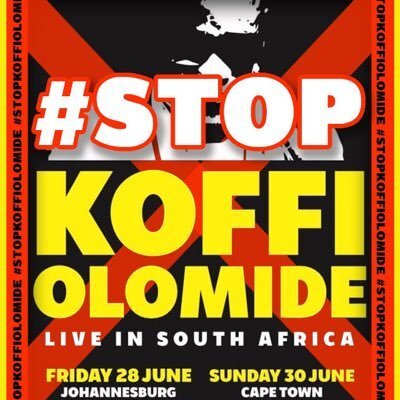 Stop convicted woman abuser Koffi Olomide performance in South AfricaKoffi Olomide has a documented history of committing violence directed at women. In March 2019 he was convicted of statutory rape in France and between 2002 and 2006, sexually assaulted his dancers [1]. In 2016, he was deported from Kenya for assaulting one of his dancers. Allowing him to perform in South Africa would undermine the victims of his actions, which cannot be tolerated or allowed. South Africa already has a Gender Based Violence crisis and should not be rewarding perpetrators with platforms such as this. [1] https://www.africanews.com/2019/03/19/drc-s-koffi-olomide-found-guilty-of-sexual-assault-in-france/938 of 1,000 SignaturesCreated by Stop Koffi Olomide Collective

-
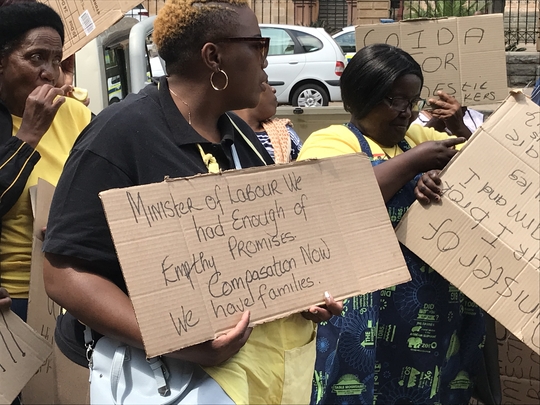 Campaign Victory: Domestic, farm and EPWP workers must be included in the National Minimum WageThese workers pay the same price for bread - and they deserve the same minimum wage! Domestic and farmworkers are some of SA's most vulnerable workers. 95% of domestic workers and 90% of farmworkers are living under the poverty line. Numbering almost 2 million, they are the largest part of South Africa’s working poor. Yet many of them are primary breadwinners for their households. The recent National Minimum Wage Law only reinforces this poverty by giving domestic workers R15/hr, farmworkers R18/hr, and EPWP workers only R11/hr -- while all other workers receive R20/hr. Sign this petition and join the campaign calling on the National Minimum Wage Research Commission and the Minister of Labor and Economic Development, to increase minimum wage for farm, domestic and EPWP workers to the R20/hr. It is time for the National Minimum Wage Law to recognise domestic, farm and EPWP workers as equal to other workers. The domestic and farming industries still treat workers as disposable, casual labor because of the legacies of colonialism and apartheid. Many of these workers have seen little change in their working conditions since 1994. They work behind closed front doors and locked farm gates, hidden from labour inspectors. They often face terrible living conditions, illegal terms of employment, poverty wages and outright physical and sexual abuse. By granting them only a portion of the minimum wage, we further reinforce their status as second-class citizens and informal workers. This allows employers to continue to exploit them, and reinforces the cycle of generational poverty.271 of 300 SignaturesCreated by Amy Tekie
-
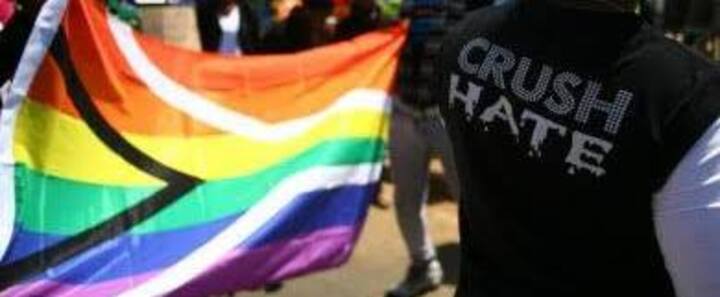 Mweli, Make Gender and Sexuality Studies Compulsory in teacher training programsKarabo Mafolo of the Daily Maverick reports that “In a 2016 report, the LGBTI organisation OUT LGBT Well-being, reported that 51% of transgender people had experienced discrimination in their education life.” This year, there was an mass hysteria about the new curriculum introducing “masturbation” as part of the new Life Orientation curriculum for grade 4 according to a misleading article by Prega Govender in The Sunday Times, 12 May 2019. This sparked the conversation on social media platforms where the concern wasn’t necessarily the introduction of sex and gender education but the level of engagement. More concerning however, is that there is currently no steps being taken to ensure that the very educators of the current and new Life Orientation curriculum are being trained to formally and professionally Gender and Sexuality Studies. The Department has previously displayed a strong capacity to retrain teachers when the CAPS curriculum was introduced in 2011. Met with great reluctance from teachers, Bongani Nkosi of The Star reported that the CAPS curriculum was implemented, reviewed and monitored - meaning the Department of Education is able to introduce gender and sexuality as part of current and future training for firstly Life Orientation teachers, and gradually, a compulsory training program for any teaching qaulification. It is the responsibility of the Department of Education to prioritize Gender and Sexuality to create inclusive, intersectional and informative learning environments starting with the teachers and filtering it down to scholars and the wider community Sources 1. Department of Education (www.education.gov.za) - Director General of Basic Education 2. Bongani Nkosi, The Star, 7 September 2018 3. Prega Govender, The Sunday Times, 12 May 2019 4. Karabo Mafolo, The Daily Maverick, 4 June 2019215 of 300 SignaturesCreated by Kay Ntshulana-Bhengu
-
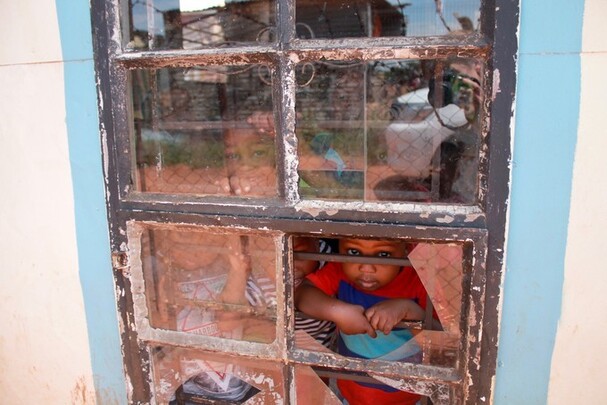 Improper infrastructure is affecting the quality of ECD education in the Gauteng ProvinceI have had the opportunity of working with an Early Childhood Development (EDC) centre situated in Freedom Park. The owner was a dedicated strong woman who exhausted all her resources to ensure a safe haven for the children regardless of how poor her facility was. Her distress was that she had been operating an unregistered crèche for three years and her one need was to find someone to meet her half way in order for her to fix the infrastructure to qualify for certification. As this was an urgent matter and the children were at risk; we worked tirelessly to secure sponsorship by approaching different corporates. At the end of six months, we had succeeded and the ECD facility was child friendly, complied with the requirements and they were successful in registering. This ECD centre , was like the many others which are currently operating without proper infrastructure. Fortunately for this one funding was awarded; other ECD centres take years to receive funds or to even raise enough finances for important resources. In fact; within the Gauteng province alone, the Department of Social Development has identified 1100 ECD centres that are unregistered [1]. It has almost become a way of life that individuals within the community will establish a business of an unviable ECD facility with good intentions of servicing the community. This however doesn’t move away the fact that the facility still endangers the lives of children and that there's high risks. It is unfortunate that; even with the President’s promise of quality early childhood education during the 2019 State of Nation Address [2]. These promises will never be realised if there’s infrastructural problems hindering the realisation of quality education services. At the forefront of the Department of Social development’s plan to register ECD centres lies the requirement that an ECD centre, in order to be eligible for educator training, funding and benefits; must meet infrastructural requirements on the time of its registration. Yes, the government does provide an operational subsidy of R15 a day per pupil but the subsidy is restricted to facilities that comply with the norms and standards on its infrastructure [3]. Which means that those children in the most disadvantaged communities do not even benefit from this. Barbara Stemment head of Early childhood development at Ikamva Labantu states that “it is not that people don’t want to register but they don’t because they cannot afford to meet the infrastructural requirements set by the department [4].” She further explains that if the ECD centre shuts down; then where will those children go? Therefore, it is unfair to expect informal ECD facilities to meet infrastructure requirements when there is no identifiable government programme/subsidies for financing the construction or upgrading of facilities. It is key to note that the government has abdicated itself from financing the infrastructure that serves as a basis for accessing the operational subsidy and this proposes a problem. With the new changes on early childhood development education having had migrated to the Department of Basis Education; the question is: how will quality education be realised if there are infrastructure challenges already crippling the basic education system? And how will unregistered ECD centres due to infrastructure challenges be incorporated into the government’s current infrastructure improvement plans? This year marks the 20th celebration of National Child Protection week in South Africa. An annual campaign of the South African government to promote a culture of respect for children’s rights and an awareness of child safety [5]. However, if early childhood development programmes are performed in poor facilities then the safety, stimulative and quality learning is not achieved. Can we then say that as citizens we’ve made it our duty to protect and create a safe and secure environment for children in informal crèches? While the commitments of the government to introduce a two years compulsory ECD programme were welcomed as great improvements at the 2019 State of Nation Address; seriousness will only be realised if at the heart of the Department of Basic Education ‘s budget allocation is a share dedicated to a body that will specifically be targeted at early childhood development and tackling the infrastructure dilemma costing the success of the quality of education. Therefore, the department’s interventions should include Infrastructure challenges of unregistered ECD centres and helping these facilities be compliant. The first six years of a child's life are of paramount importance and in order to realise quality education for any child requires quality facilities and we ought to always remember this. Words to remember : "There can be no keener revelation of a society's soul than the way in which it treats its children."- Nelson Mandela. • ECD Centres – Early Childhood Development Centres. • DSD- Department of Social Development • DBE- Department of Basic Education • MEC – Member of Executive Council • Joburg Metro- City of Johannesburg Metropolitan Municipality References: [1] “Over 1,000 unregistered crèches in Gauteng,eNCA, 5 April 2019 https://www.enca.com/news/over-1000-unregistered-creches-gauteng [2] SONA gives hope for early childhood development, David Harrison, 11 February 2019, https://www.iol.co.za/pretoria-news/sona-gives-hope-for-early-childhood-development-19237438 [3] Obstacles for ECDs , Jess Drewett, 30 April 2018, http://livelihoods.org.za/2018/04/30/obstacles-for-ecds/ [5] Barbara Stemment , ikamva labantu, 18 December 2019, https://ikamva.org.za/ [4] Child Protection Week 2019, South African Government, https://www.gov.za/ChildProtectionWeek2019 Picture: https://www.groundup.org.za/article/raising-south-africa-informal-creches-are-desperate-aid/241 of 300 SignaturesCreated by Matshidiso Mabe
-
 Demand for MEC Simelane-Zulu to supply Hormone Replacement Therapy at King Edwards VIII HospitalKwaZulu-Natal is South Africa’s second most densely populated province [5]. King Edward VIII Hospital is a tertiary level hospital providing services to the whole of KwaZulu-Natal and parts of the Eastern Cape [6]. The hospital currently does not offer any transgender programs with free distribution and access of hormones. Our objective is for them to do so by making it accessible to people as it currently only available in two provinces (Gauteng and Western Cape) in South Africa. Transgender people are defined as those whose personal identity and gender does not correspond with their birth sex [4]. Implementation of gender-affirming services proves to be scarce and difficult in our country [2]. Section 9 of the Constitution prohibits discrimination, among others on the grounds of gender [1]. The Alteration of Sex Description and Sex Status Acts (2003) corresponds with our constitutions laws which permits one to change the sex description on their birth record under certain circumstances [4]. Hormone replacement therapy (HRT) acts as a very vital part for transgender people to feel more like themselves. Since transgender men and woman will never be able to produce these hormones naturally, HRT is a lifelong treatment that needs to be used recurrently, similarly to chronic medication. People take either the hormone Oestrogen or testosterone with other drugs to help them attain the physical characteristics that society ascribes to the gender they identify with. Examples of this treatment include the development of breasts for transgender woman by taking the hormone Oestrogen whilst Testosterone aids masculinity advances for transgender men [3]. Trans South African you-tube Vlogger Glow Mamiii shares her personal journey on the struggles of gaining access to HRT. She began seeking treatment at Chris Hani Baragwanath (Soweto) but was told she would have to wait 3 months for them to administer the HRT. She then opted to seek treatment from a private doctor which not many people can afford as medical aids don’t cover gender-affirming treatments such as HRT and surgeries. She reveals her struggle of finding a trans-friendly private practitioner as well as her personal details regarding the bodily changes, psychological and emotional distresses she experienced on HRT [7]. During her psychiatric consultations and psychotherapy meetings she speaks out against being diagnosed with gender dysphoria as transgenderism is classified as a gender dysphoria disorder [8]. Johannesburg based media-advocacy organization Iranti published a press release from the World Health Organization which removes mental illness from Trans Diagnoses [9]. Medical aid schemes don’t cover gender-affirming treatments such as HRT and surgeries as they are considered “lifestyle choices” which leaves trans people with the burden of covering these costs [1]. HRT can cost up to R800 a month adding up to almost a quarter of a million rand on medication [3]. 15% of transgender people are living in poverty compared to 4% of the general population. 19% of transgender people report lacking any form of health insurance including medical aid [6]. Studies show that access to gender-affirming treatment helps reduce thoughts of self-harm and suicide among transgender people. The only public hospitals that offer trans-specific healthcare services in South Africa are [4]: • Chris Hani Baragwanath (Soweto) • Steve Biko (Pretoria) • Groote Schuur (Cape Town) • Helen Joseph (Johannesburg) Treatments are often limited and dependent on how close you live to the facility and the lengths of their waiting lists. The treatment entails regular check-ups and to ensure correct dosage. Withdrawals from HRT lead to severe psychological and emotional distress like gender dysphoria, depression, anxiety and fatigue. [1] https://www.2oceansvibe.com/2018/10/26/healthcare-medical-aid-and-the-transgender-struggle-in-south-africa/ [2] https://bhekisisa.org/article/2018-10-26-00-tips-for-finding-a-trans-friendly-healthcare-provider [3] https://bhekisisa.org/article/2018-10-26-00-the-high-cost-of-being-yourself-transgender-healthcare-and-private-medical-aids [4] https://www.sowetanlive.co.za/s-mag/2019-04-05-conversations-transgender-healthcare-in-crisis/ [5] https://www.southafricanmi.com/population-density-map.html [6] http://www.kznhealth.gov.za/kingedwardhospital.htm [7] https://youtu.be/WXYiZK0l6mc [8] https://youtu.be/CpCwS177WhU [9] http://www.iranti.org.za/169 of 200 SignaturesCreated by Mamello Mofokeng
-
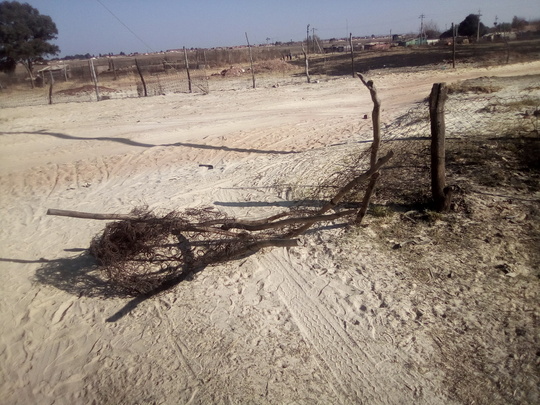 We demand the department of mineral resource to rehabilitate the tailing dump of snake park sowetoThe tailing dump contains highly radioactive chemicals like uranium, which can break down into radon gas. This can cause lung cancer , miscarriage and organ failure. our community is exposed to this radioactivity everyday giving us a short life span. Mbali Zulu a 35 year old woman she is a mother who gave birth to a child with cerebral palsy, her child was born with deformities and mental disorder. Her child cannot talk or take her self to the toilet ,she has to buy nappies for the rest of her life. She took her child for adoption because she only survives with grant money and it was not enough for her and the baby.[2] They are many children with cerebral palsy in our community .This is because if a pregnant woman swallows or breathes in radioactive materials , these may be absorbed into her blood stream. from the blood they may pass to the umbilical cord or near the womb and expose the fetus to radiation.[3] Many children are inclined to show symptoms of asthma like having a wheezing chest along with a running nose. The is a higher prevalence of asthma symptoms ( 21,9% and 32,9%) compared to the studies of Vusimuzi (south african national medical research council) [4] Durban roodepoort deep mine began operations more than a century ago in 1895. DRD gold mine sold the tailing dump to mintails limited mine in 2007. Mintails limited assumed full responsibility for its environmental management and rehabilitation. At that time the dump infrastructure was sound and fully contained it did not cause any pollution. In 2010 mintails limited did not maintain the dump, its infrastructure began to fail. Dust and water effluent began to occur. Because mintails limited is now liquidated. It is now within the powers of the department of mineral resource to allow and direct for the rehabilitation of the tailing dump in snake park soweto. [1] water research commission report no 100/02/03 (guidance for rehabilitation of contamination of gold tailing dam foot print) [2]https://youtu.be/0xIVCeIFmLw [3] bench-marks.org [4]www.theconversation.com [5]james duncan/adviser james [email protected]109 of 200 SignaturesCreated by Thokozile mntambo
-
 We demand trained staff members at UNISA - Durban main campusThis is important because; • Durban is very diverse, students who come from deep rural areas need to be catered for in a manner that levels up with their current knowledge. • Students must be given valid and significant information that does not mislead them on their academic choices. • .To avoid students from travelling all the way to Gauteng, in order to get their queries attended to, and fixed. • To ward-off the confusion students have and put them at ease with their studies which will also improve their academic performances. • To avoid students from wasting time and money by taking modules which are not required for their qualifications. •Qualified and well-trained staff members can make UNISA one of the best universities in Africa.139 of 200 SignaturesCreated by Nonhlanhla Cynthia Mhlongo
-
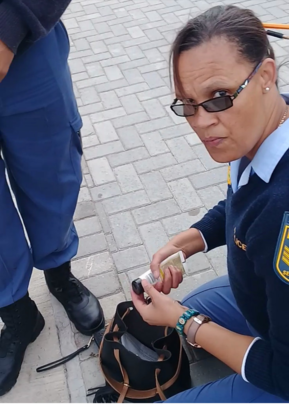 Justice for Esethu Mcinjani. We demand police to be held accountableEsethu Mcinjana was arrested on Sunday 19 May 2019,spent the night at Sea Point Police Station.This happened shortly after arriving early for a job interview at a hotel. She arrived early for the interview and went to sit on a bench on the promenade to wait while taking selfies.The two police officers came and searched her going through her handbag. Finally, they decided to arrest her without any valid reason or evidence. This is wrong on many ends and in a democracy of 25 years, it violated so many rights of this Black Womxn. During apartheid in South Africa, the freedom to movement of black citizens to and from urban areas were restricted through pass laws. The right to movement and residence is a key aspect of respecting people's freedom. However, in the case of Esethu it can be concluded that this right was clearly violated because of the color of her skin and the area she was found arrested in. The two police officers failed to uphold the law as they violated Esethu's right to equality. Meaning she was not treated equally and fairly, she was discriminated unfairly on the basis of race, gender, ethnic or social origin. This is evident as she told them and showed them (email/message) why she was in that area, at that point in time. To even question why she is there, is already wrongful in many basis. The arrest could happen to any of us on any given day, especially in a city like Cape Town, were black people's movement is constantly questioned because of racism that continues to thrive even after 25 years of democracy. Surely, this systematic issue needs to be addressed urgently in this country. 1.Ella Ndongeni. A woman was taking selfies on a Sea Point bench. She was arrested and locked in a cell overnight. GroundUp. 23 May 2019 2. Bill of Rights. The Constitution of South Africa.93 of 100 SignaturesCreated by Dineo Mogotsi
-
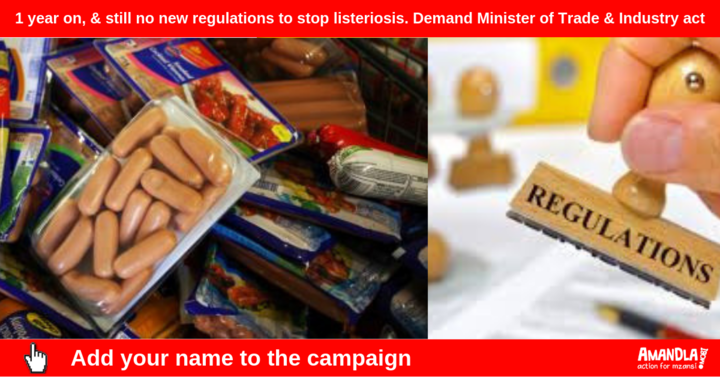 1 year on and still no regulations to stop listeriosis. Demand Minister of Trade and Industry actA year ago 200 people lost their lives to listeriosis [1], the outbreak exposed how big food companies don't care about what is in our food and if it's healthy and safe for us to eat. To make things worse, the Department of Trade and Industry has still failed to put in place new regulations for processed meats a year after the outbreak These regulations were delayed by big food companies by 4 years [2]. Listeriosis might not be in the news but we all know the devastation it caused. If enough of us come together and expose government’s failure to put in place regulations a year on, the Minister for Trade and Industry may have no choice but to finally implement these regulations. We need regulations that force companies to make sure the food they sell us does not threaten our health and safety. During the Listeriosis outbreak last year that killed more than 200 people, Tiger Brands refused to allow independent health inspectors into their factory twice [3]. Only after the police intervened- were the health inspectors allowed entry. Tiger Brands are also fighting a class action lawsuit drawn against them by claiming they aren’t liable for the Listeriosis outbreak [4] even though we know the outbreak came from their factory [5]. It was only after a national outcry that Tiger Brands recalled the infected batches of polony and called for studies to find the causes of the outbreak. Government stated the crisis was over but listeriosis infected polony was still found in rural areas across the country [6]. This has all exposed that big food companies like Tiger Brand are happy to send us infected or unhealthy food that is killing us, so long as it makes them more money. We could be in danger of another outbreak all because the food industry isn’t being regulated properly. Listeriosis is dangerous particularly when people don’t have access to clean water and healthcare. Over 200 people died in the outbreak and just under 1000 people, mainly pregnant womxn*, children and the elderly, fell sick. [7] We can’t allow Tiger Brands and their unsafe polony to put more of Mzansi’s people in danger. If enough of us come together and join this campaign we can sound the alarm and shine the national spotlight on the truth; another listeriosis outbreak could be on our doorstep and it’s clear big food companies like Tiger Brands aren’t worried because they care more about their profits than our health. The Minister of Trade and Industry Ebrahim Patel will have no choice but to respond to our pressure and ensure the speedy implementation of processed meat product regulations that the food industry have delayed. This will make sure there are proper checks and balances in place that force companies to put the health of our nation first. The people of Mzansi shouldn’t get sick because of corporate greed. We call on you, Minister of Trade and Industry Ebrahim Patel, to speedily implement the proposed processed meat products regulations. Dear Minister of Trade and Industry Ebrahim Patel, One year on after 200 people lost their lives to Listeriosis, the National Regulator for Compulsory Specifications (NRCS) has still not implemented the specifications for processed meat products. As Minister for Trade and Industry it is your responsibility to ensure the NRCS does it's job to protect human health, safety and the environment. The fact industry delayed specifications by four years, and we still don't have specifications a year after the listeriosis outbreak, suggests the Department of Trade and Industry is failing to put in place and enforce regulations to stop greedy companies from threatening our health and safety. We the undersigned call on you to ensure processed meat product specifications are put in place as soon as possible, but at the latest the end of this year. **Update on campaign** Good news! The Minister of Trade and Industry Ebrahim Patel finally signed new processed meat regulations. The regulations came into effect in October 2019 [8]. These regulations were first developed in 2014, but industry rejected them [9]. Together with Heala, we helped build pressure on the Minister to act, which hopefully is what pushed the National Regulator for Compulsory Specifications (NRCS) and the Department of Trade and Industry to finally put in place the regulations. The listeriosis outbreak put food regulations and corporate greed in the spotlight. [1] Tiger Brands to Fight Listeria Class Action, Reuters April 2019 [2] Cold meat industry blocked compulsory specifications for 4 years, ENCA March 2018 [3] Listeria sleuths ‘called for’ backup, Lynley Donelly for the Mail & Guardian March 2018 [4] Victims of listeriosis outbreak wait for justice and closure, Cheryl Kahla for the South African January 2019 [5] Listeriosis outbreak: How it started, how it was traced, and how it was finally stopped, Riaan Grobler for News24 September 2018 [6] Listeria-tainted polony still on the shelves in rural areas, Tanya Farber for Business Day October 2018 [7] Listeriosis outbreak: How it started, how it was traced, and how it was finally stopped, Riaan Grobler for News24 September 2018 [8] Regulations for processed meat to take effect in October, ANA Reporter for IOL September 2019 [9] Listeriosis policy not yet passed despite outbreak killing 200 people, Tebogo Monama for IOL June 2019112 of 200 SignaturesCreated by Khaliel Moses
-
 Tell universities to be inclusive of all Gender non-conforming individualsMany people suppress their identities in fear of how the society will respond if they choose to freely express their gender identities. Even in spaces like Universities that are deemed to be the most diverse, there certain shortcomings on the recognition of gender complexities. Rivonia Pillay in her article explained how much of her identity she had to put aside as a product of the fear that her external environment endangers [2]. Kristen Renn also mentioned some of the challenges faced by non- gender conforming individuals in higher institutions. Three of her major concerns included identity development, campus climate and; state and national social and policy context [3]. Most universities in South Africa still considers one's gender identity to be the same as the sex they were assigned to at birth. That notion fails to fully recognise gender complexities. To date, most universities still make use of the title Mr, Ms, or Mrs when referring to student or addressing them in any formal communication. The facilities at universities are also divided on the basis of one's sex, which is often equated to ones gender identity, i.e. residences, restrooms. Due to little acknowledgement and inclusion, gender non conforming people are in continuous battles. As a result, please join us put pressure on Prof Rob Midgle and the Council for Higher Education South Africa to make the university experience inclusive of everyone irrespective of their gender identity. 1.https://www.wits.ac.za/transformationoffice/programmes-and-projects/sexual-orientation-and-gender-identity-advocacy-programmes/gender-affirming-titles/ 2.https://ewn.co.za/2018/12/28/analysis-5-reasons-why-south-africa-still-hasn-t-won-lgbtq-equality/amp 3.Renn, K. A. (2010). LGBT and queer research in higher education: The state and status of the field. Educational Researcher, 39(2), 132-141.38 of 100 SignaturesCreated by Noma Bore
Cookies help us improve and optimise this site. Read more